SYNAESTHESIA
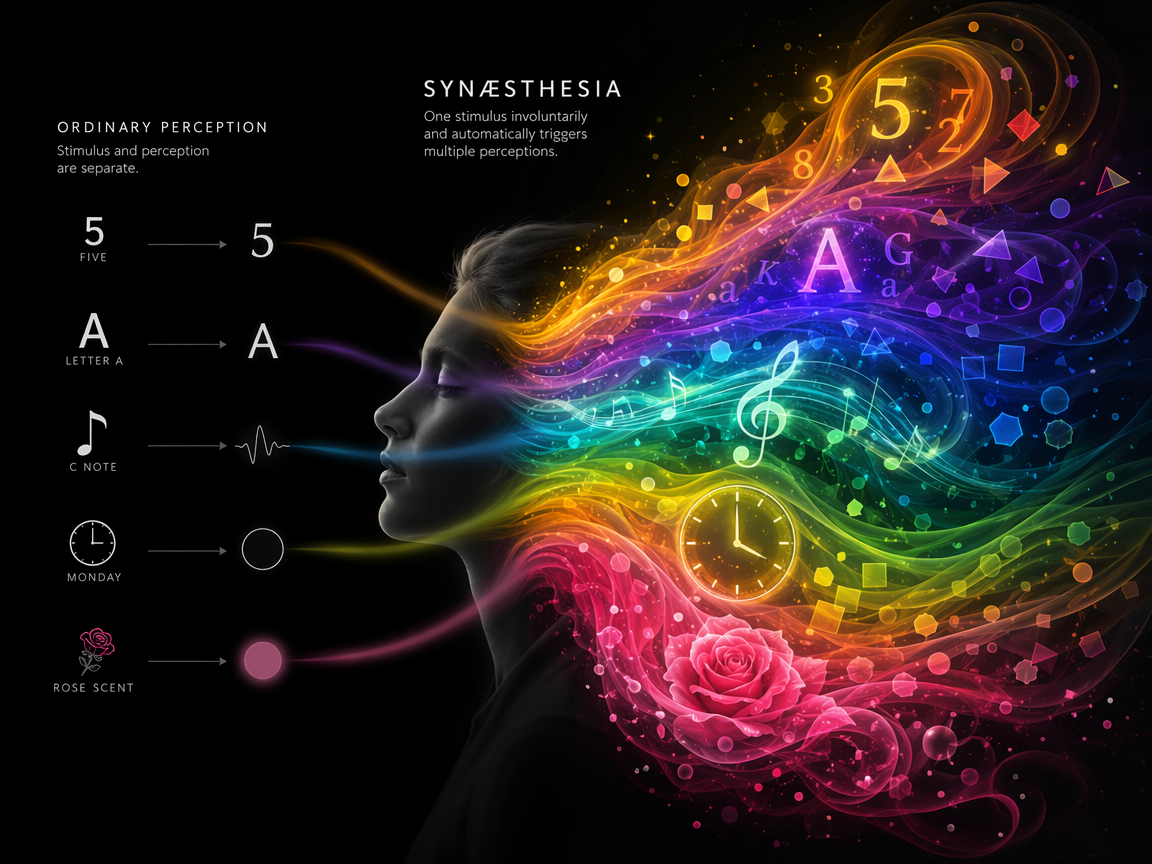
Synaesthesia (pronounced sin-es-thee-zee-uh) is a rare neurological condition in which the senses become linked together. For someone with synaesthesia, one type of sensation automatically triggers another.
For example, a person might hear music and see colours at the same time, or they may look at letters and numbers that always appear to have their own specific colours. Some people even associate words with particular tastes or smells.
These experiences are completely real to the person who has them. They are not hallucinations, dreams or signs of mental illness. The extra sensations happen automatically and cannot be switched on or off.
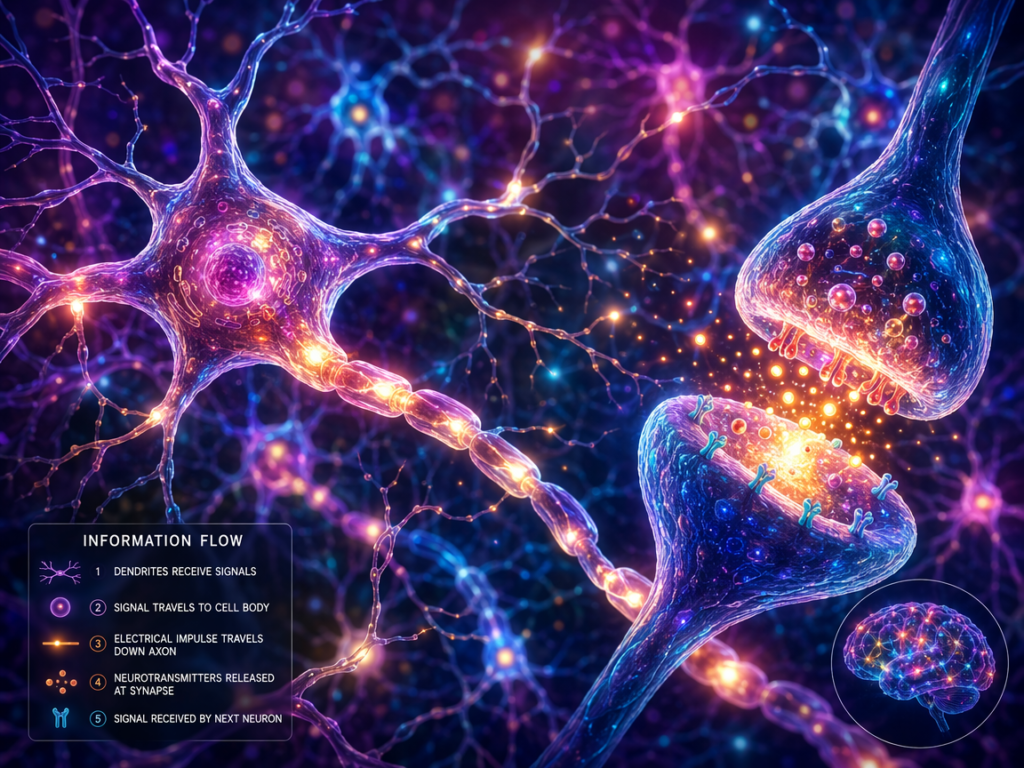
Scientists believe synaesthesia happens because certain parts of the brain communicate with each other more than they do in most people. Although researchers are still learning exactly how it works, it is thought to be something people are born with, even if they don’t realise it until later in life.
There are many different forms of synaesthesia. Some of the most common include:
- Coloured letters and numbers – where every letter or number has its own colour.
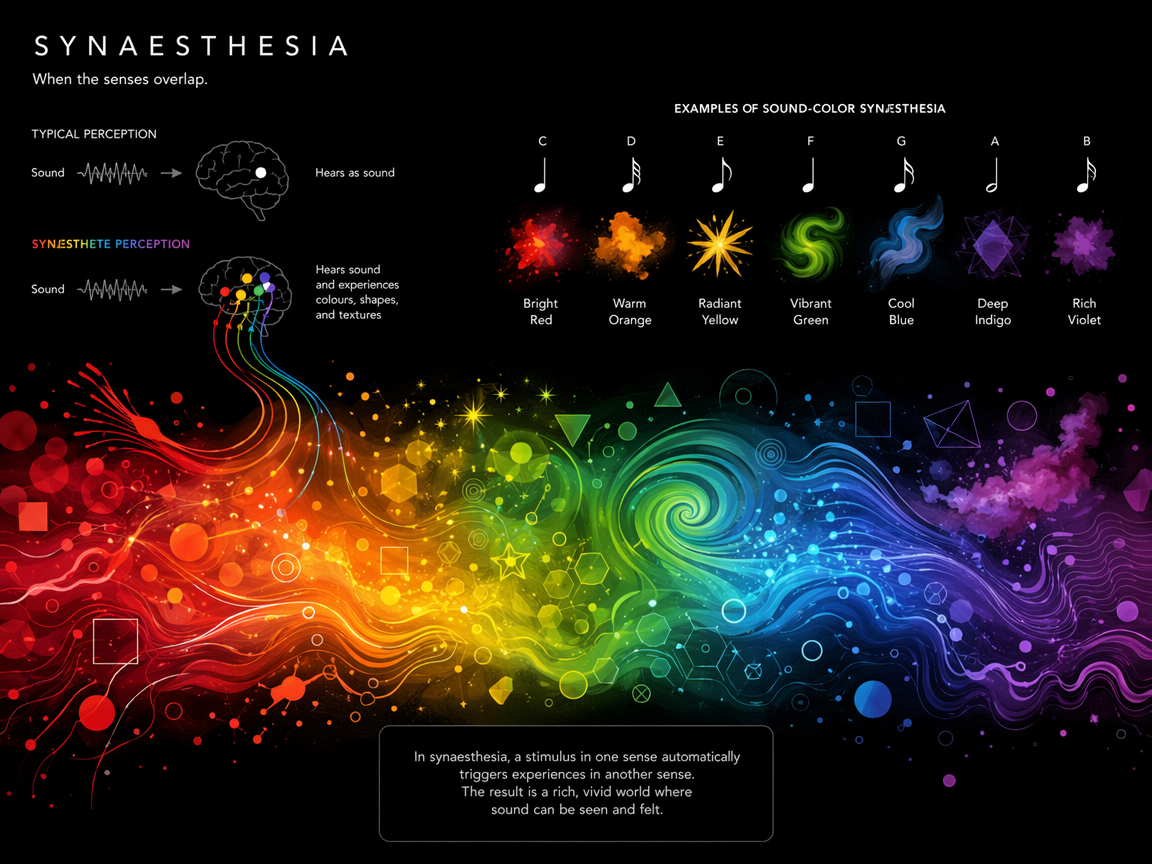
- Seeing colours when hearing sounds – where music, voices or everyday noises create flashes or patterns of colour.
- Experiencing time in space – where days, months or years appear in fixed positions around the person.
- Tasting words – where hearing or reading certain words creates a distinct taste.
Most people with synaesthesia don’t find it frightening. In fact, many say they have always experienced the world this way and assumed everyone else did too. Some even find it helpful, as it can improve memory or inspire creativity.
In this film, the character develops synaesthesia rather than being born with it. While this is much less common, changes in perception similar to synaesthesia have occasionally been reported after head injuries, strokes, migraines or certain neurological conditions. The film uses this fascinating phenomenon as a way of exploring how dramatically our experience of the world can change when the brain begins to process information differently.
Synaesthesia reminds us that no two people experience the world in exactly the same way. What one person sees, hears or feels may be very different from someone else’s reality—and that is part of what makes the human brain so remarkable.
Can you develop Synaesthesia?
Most people with synaesthesia are believed to be born with it. Their unusual sensory experiences begin in childhood and remain with them throughout their lives. For many, it is simply the way they have always experienced the world. But can someone develop synaesthesia later in life? The answer is yes – although it is extremely rare.
Doctors and researchers have documented cases in which people have begun experiencing synaesthesia after changes to the brain. These have included head injuries, strokes, certain types of migraine, epilepsy and, in some cases, damage to the visual system. There have also been reports of temporary synaesthesia being triggered by psychedelic drugs, although these experiences are very different from the lasting condition experienced by lifelong synaesthetes.
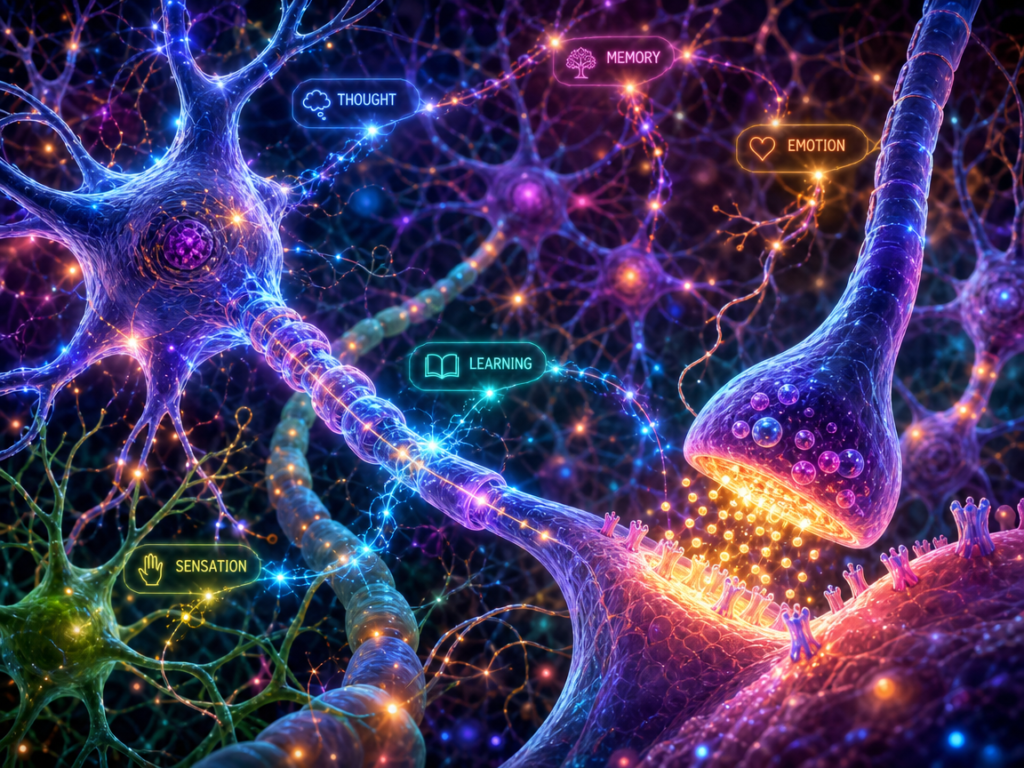
Scientists believe that, in these rare cases, changes in the brain may create new connections between areas responsible for processing sight, sound, touch and other senses. As a result, a person might suddenly begin seeing colours when they hear music, or experience other unexpected combinations of sensation.
Because acquired synaesthesia is so uncommon, researchers are still trying to understand exactly why it happens. Every documented case helps build a clearer picture of how the brain adapts, rewires itself and processes information. The character in this film experiences a fictional version of acquired synaesthesia. While the story has been dramatised, it is inspired by real neurological research and by the remarkable fact that the human brain is capable of changing in ways we are only just beginning to understand.
One of the most fascinating aspects of acquired synaesthesia is that it reminds us how flexible the brain can be. Even in adulthood, the brain is constantly adapting, learning and forming new connections. Although developing synaesthesia is exceptionally rare, the condition offers scientists a unique window into one of the greatest mysteries of all: how our brains create the rich and deeply personal experience that we call reality.
Synaesthesia Today
For many years, people with synaesthesia kept their experiences to themselves. If you told someone that music had colours, or that the letter “A” was always red, you might simply be told you had a vivid imagination. As a result, many people assumed everyone experienced the world in the same way they did. Today, that has changed. Thanks to advances in brain imaging and neuroscience, synaesthesia is recognised as a genuine neurological condition. It isn’t considered an illness or something that needs to be “cured”. Instead, researchers see it as one of the many ways in which the human brain can interpret the world. Most people with synaesthesia live completely ordinary lives. Many don’t even realise they are different until they discover that other people don’t see colours in music or taste flavours in words. For them, these extra sensations are simply part of everyday life.
Famous People with Synaesthesia
A surprising number of well-known artists, musicians and writers have spoken about experiencing synaesthesia. While everyone’s experience is unique, many say it has influenced the way they think and create. Among the best-known are musician Pharrell Williams, who has described seeing colours when he hears music, and singer-songwriter Billie Eilish, who says songs, numbers and letters all have colours, shapes and textures.
Composer Alexander Scriabin believed every musical key had its own colour, while painter Wassily Kandinsky explored the relationship between colour and sound throughout his career. Author Vladimir Nabokov described letters of the alphabet as having their own distinct colours. Remarkably, his wife and son also experienced synaesthesia, suggesting that it can run in families. Not everyone with synaesthesia is an artist of course – people from every walk of life have the condition. It is simply one of the many ways a human brain can be wired.
What Scientists Are Discovering
Although synaesthesia has been known about for well over a century, scientists are still uncovering how it works. Modern brain scanners have shown that when someone with synaesthesia experiences a sound, word or number, areas of the brain linked to other senses often become active at the same time. This has helped confirm that synaesthesia is a genuine neurological phenomenon rather than something imagined.
Researchers also believe there may be a genetic link, since the condition often appears in several members of the same family. However, no single gene has been identified, and many questions remain unanswered. One of the most exciting areas of research is what synaesthesia can teach us about the brain itself. By understanding why some people’s senses naturally connect with one another, scientists hope to learn more about memory, creativity, learning and even consciousness.
Some studies have also explored why a small number of people develop synaesthesia later in life. In rare cases, it has been linked to head injuries, strokes, migraines or other changes to the brain. Understanding these unusual cases may help researchers learn more about how our brains process the world around us. For this film, the director Linda James liaised with Sussex University who are conducting research into this amazing condition:
https://www.sussex.ac.uk/synaesthesia/
Seeing the World Differently
Perhaps the most important thing society has learned about synaesthesia is that there is no single “normal” way to experience reality. Most of us assume that everyone sees the same colours, hears the same sounds and experiences the world in much the same way. Synaesthesia reminds us that this isn’t always true. Two people can look at exactly the same object yet experience it in very different ways. So rather than being seen as a disorder, synaesthesia is increasingly viewed as a fascinating example of the incredible diversity of the human mind. It offers a glimpse into just how wonderfully varied our perceptions of the world can be and how much there is still to discover about the brain.